Monday, April 20, 2009

HISTORICAL & ARTISTIC STYLES

Egyptian
Marchesa Resort 2009 This dress shows the influences of the Egyptian historical period with it's draping, the white color, the large amount of fabric used, and the heavy decoration of jewelry on the dress.

Greek-Roman
Monique Lhuillier from Spring 2008 RTW
This dress shows influences from the Greek and Roman historical periods with the limited amount of sewing on the garment and the focusing on the waist with the belt.
Renaissance
Christian Dior Fall 2007 Couture
The Renaissance historical influences are shown in this dress through the eleborate work to create it as well as the design of the dress to complement a woman's figure thorugh the use of the wide neckline.
Baroque
Dolce & Gabbana - Spring 2009
The Baroque influences in these gowns are in the exaggaration of the hips through the width of the dress. Clothing during this period of time was seen more as a costume for a character than clothing for everyday life.
Rococo
Christian Dior Fall 2007 Couture
This dress exhibits the influences of the Rococo historical period through the overly ornate decorations, the low neckline, and the expensive textiles used.
Romantic
Elie Saab Spring 2009 Couture
The Romantic historical influences are shown in this dress through the higher waistline, the puffy gothic-like sleeves and the attention to the tailoring of the garment.

Monday, April 6, 2009

Geneology of the Baseball Cap

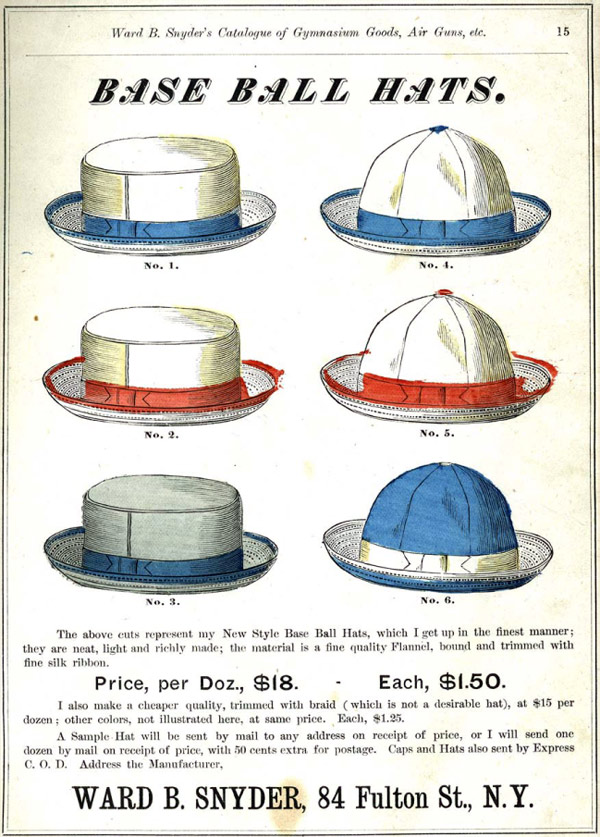
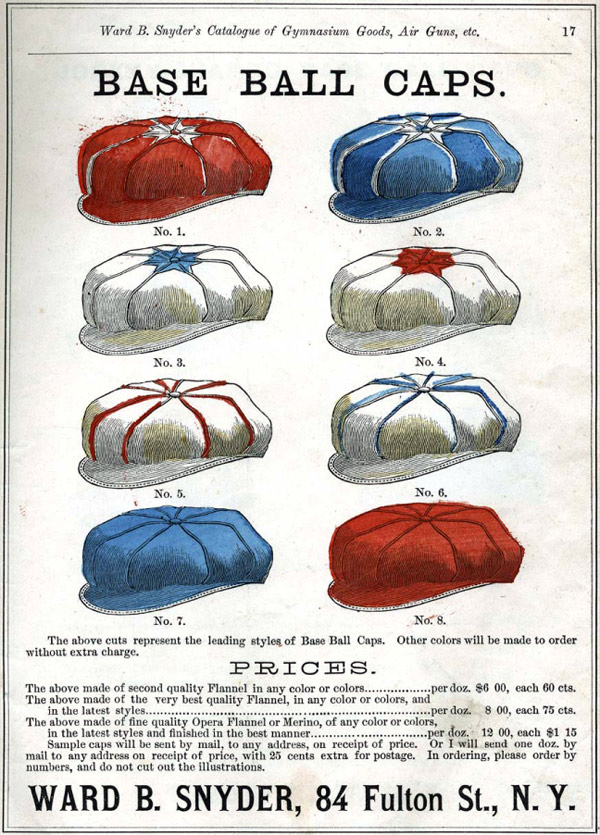
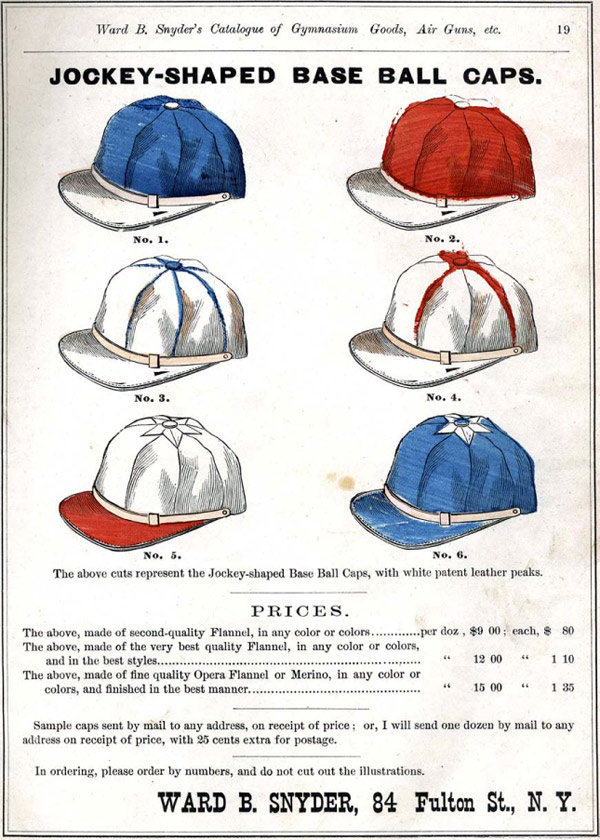
The baseball cap originated from straw hats in the 1850's. The first team to wear baseball's first uniform was the New York Knickerbockers in 1849, which included the straw hat. The modern day baseball cap main characteristics emerged a few years later in a version made of merino wool. It was inspired as well by three different original versions: the boxy cap known as the college cap, the conventional triangular-sectioned cap known as the Boston cap and a soft crown cap (similar to a rain hat) that was called the base ball hat. The official name of the baseball cap that major league teams wear is called the "59Fifty." Base ball hats from Snyder's 1875 catalog.
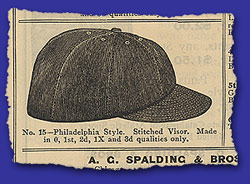
An image of an advertisement in Spalding's Base Ball Guide from 1888. Prices ranged from 12 cents to 2 dollars per cap. The closet version to the baseball cap we know today is No. 11 the Jockey Shape Cap. This cap was fashioned after the caps worn in the horse-racing circuit.
1896 Spalding Boston Style Short Brim Baseball Cap
manufactured by Spalding Sporting Goods.
Spalding introduced the first stitched visor in 1903. The stitched visor created a longer-lasting cap that held the shape better.
1910-20’s D&M Maroon and Gray Baseball Uniform with short brim cap.
manufactured by Draper and Maynard Sporting Goods Company
In the 1940's the modern baseball caps started to be produced. The hats now have adjustable bands where as the original ones were elastic.
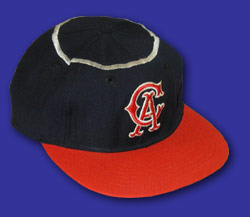
1961 hat worn by the American League Los Angeles Angels, with the halo on the crown. This cap was used through the 1970 season, after this the halo was removed and included in the team's logo.
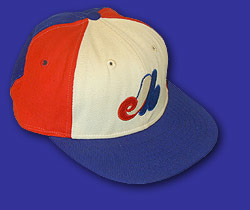
Baseball cap worn by the Montreal Expos from 1969 to 1991. This cap is considered one of the most colorful worn in modern times.
Replica baseball caps from today manufactured by Majestic Athletic Baseball Products
In our day and age, you can get baseball caps with anything on them. The majority of people in the United States have worn a baseball cap at sometime in their life.
Wedding party baseball caps manufactured by the Rosemary Company
Designer baseball caps can be seen in most luxury stores and are a hot accessory.
Louis Vuitton Baseball Cap
2008
The baseball caps that we see today are still based on the same design as the traditional "59Fifty" cap. Everywhere you look you can purchase a baseball cap in the latest design and logos for your enjoyment. I look forward to see the new possibilities of design for the baseball cap in the future.

Sunday, March 1, 2009

Historical Draped and Tailored Garments

Historically Tailored Garment #1
Image of Vivian Leigh from the movie Gone with the Wind
-filmed in 1939
-set during the Civil War in Atlanta, GA
- approximate dates 1861-1865
This dress is a typical dress that southern women wore during the time period. The garments were tailored to fit them perfectly and the women wore corsets under the dresses.
Historically Tailored Garment #2 U.S. NAVY Uniforms - 1899
These uniforms would have been worn by enlisted men. You can still see the influences of these in today's U.S. Navy uniforms.
Historically Tailored Garment #3
Monaco's Prince Rainier and Grace Kelly, April 14, 1956
Grace Kelly's Dress designed by Helen Rose
Wedding attire is one of the most tailored type of garments in fashion in history and still today.
Historically Draped Garment #1
Traditional Geisha Dress
-image from before 1960.
Geisha dresses are draped fabric that is normally wrapped and folded in to create the distinct shape of the women.
Historically Draped Garment #2
Women's Abaya
-this is the traditional form of Islamic dress for women. This is still the traditional dress in many societies. Saudi Arabi still requires women to be completely covered. This image shows women in Egypt where it is okay for them to show their faces.
Historically Draped Garment #3
African Tribal Dress
Xhosa tribal South and Western Cape
These are the traditional garments that are still worn today. They show three different forms of dress for three different people. Many tribes use a distinct form of dressing for married and unmarried people to easily be able to tell the difference.

Monday, February 16, 2009

6 Functions of Dress

1. Environmental Protection
United States Coast Guard Immersion Suit - These suits are used for crews that are in extreme weather situations, such as the crews of the ice breaker ships that patrol the Northern part of the Pacific Ocean off of Washington State. These suits allow a person to survive a fall into the ocean during winter.
Image from April 11, 2007
2. Decoration
Mardi Gras Parade Participants - New Orleans - February 4, 2008
Every year residents of New Orleans, Louisana participate in Mardi Gras. The participants decorate themselves as anything and everything for the parades. Mardi Gras is the end to the pre-Lenten Carnival fun.

3. Gender Differentiation

During World War II women went to work in the factories to help support our country. The women who worked had to wear appropriate clothing for their jobs. This helped contribute to the change in dress for women over the decades. The image below is of women working on a bomber at the Douglas Aircraft Company in Long Beach, California in 1942.

4. Group Membership

Members of the U.S. Supreme Court wear the same robes no matter if they are male or female. The only thing that separates the men and women are what they wear under the robes. These robes identify them as part of the highest court in the United States.

Image showing Supreme Court in 2006.

5. Ceremonialism

For most people one of the most important ceremonies of their life is their wedding ceremony. For Chinese people it is very important to follow their customs when getting married. One of the customs when getting married is for the women to wear red, the red dress is supposed to bring the bride good luck.

Image from April 4, 2008
6. Sexual Enhancement
Elvis was considered to be very sexual during his peak in music. Many tv shows did not show him from the waist down to avoid getting viewers upset. He is considered to be the King of Rock n' Roll.
Image below: 1968 Elvis Comeback Special

Thursday, January 29, 2009

What is a source book?

A fashion source book is a resource to inspire and provide knowledge of the fashion world. Inspiration in a source book can come from anywhere: especially history. The source book is a great way to collect the inspirational images, text and videos in one place for use on a regular basis.
To me a fashion source book is extremely valuable to me just like my daily vitamins.